Top 7 Baseball Agility Drills for Unlocking Your Potential
Speed in baseball isn’t just about running fast in a straight line. The best baseball players separate themselves with quick reactions, efficient movement, and the ability to make split-second decisions in real game situations. That’s where baseball agility drills come in.
Whether you coach youth ball or train advanced athletes, a focused agility plan is one of the best ways to unlock a player’s full potential on the baseball field.
Baseball agility drills help players to start, stop, react, and change direction quickly while maintaining balance and body control. It’s what allows a shortstop to field a hard-hit ground ball or a base runner to explode out of a lead and dive back to first. With consistent training, a player will be able to move faster, react quicker, and stay balanced under pressure.
Here are the top 7 baseball agility drills:
Ladder drills
Cone shuffles
T-Drill
Box Drills (Plyometrics)
5-10-5 shuttle
Reaction ball drills
Crossover Step Drills
Why Agility Training Matters in Baseball
Baseball is a game of change of direction, quick reflexes, and explosive first steps. From reacting to a hard-hit ground ball, tracking a fly ball, or breaking toward first base out of the batter’s box, agility directly impacts performance.
The key benefits of structured agility training include:
Faster reaction time
Improved quick decision-making
Better control of your body
Increased overall speed
Reduced risk of injury through better movement patterns
For baseball athletes, agility isn’t optional: it’s foundational to athletic performance.
Here are Five Components of Baseball Agility that will enhance athletic performance.
Understanding these components helps you coach or train with purpose:
-
Acceleration – The ability to reach top speed quickly.
Example: Charging a slow roller or breaking for a steal. Deceleration – Stopping under control without losing balance.
Example: Breaking down before fielding a ball.Change of Direction – Efficiently switching movement paths.
Example: Reacting to a deflection or turning a double play.Reaction Time – Responding instantly to a cue.
Example: Jumping on a line drive or reacting to a bunt.Coordination – Controlling multiple movements simultaneously.
Example: Syncing footwork and glove work on defense.
Together, these build complete, athletic movement for the foundation of elite baseball performance.
Start Every Session the Right Way
Before any speed or agility work, begin with:
Dynamic stretching
Light jogging and skips
High knees and lateral shuffles
This prepares the lower body, activates a strong core, and supports injury prevention—especially during intense training sessions or spring training.
Top 7 Baseball Agility Drills
These drills form the foundation of baseball-specific quickness and movement control.
1. Ladder Drills
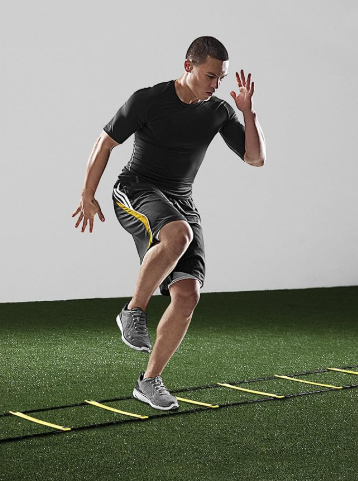
Agility ladders are one of the most effective tools for developing quick footwork, rhythm, coordination, and body control. When used correctly, they help athletes move more efficiently and react faster—key qualities for high-level baseball performance.
Goal: Improve foot speed, rhythm, and coordination.
Why It Matters: Faster, more precise footwork leads to quicker reactions, smoother transitions, and better overall movement on the field and on the bases.
Equipment: Agility ladder
Best Variations:
Quick Feet (One In Each) – Build rhythm, tempo, and speed.
In-In-Out-Out – Develop lateral control and balance.
Icky Shuffle – Enhance coordination and multi-directional movement.
Lateral Two-In Drill – Train side-to-side quickness.
Hopscotch Drill – Improve single-leg balance and stability.
Reaction Ladder – Combine footwork with visual or verbal reaction cues.
Coaching Tip: Stay light on the balls of your feet with short, quick steps to maximize speed and efficiency.
More details on ladder drills can be found here.
2. Cone Shuffles
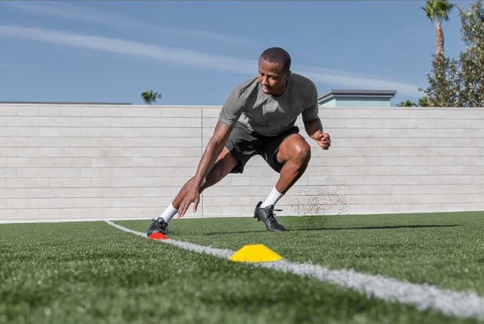
Cone drills develop quicker reactions, sharper decision-making, and confidence in complex movements. Players must be able to move efficiently from multiple angles. When done with intent, these drills turn footwork into game-speed movement emphasizing sprinting, planting, and changing direction under control.
Goal: Build lateral quickness and explosive acceleration
Why It Matters:
Infielders, catchers, and pitchers depend on efficient side-to-side movement to stay balanced, beat the ball, and make clean plays.
Equipment:
Place 4–6 cones in a straight line
Space cones 3–5 feet apart
Best Variations
Sprint, plant, and change direction
React to visual cues from a coach
Shuffle and burst into a sprint, simulating a ball hit up the middle
Practice crossover steps for turning double plays
Execution:
Start in an athletic, ready position
Shuffle laterally from cone to cone, staying low
Keep your chest up and feet quick
Emphasize body control and explosive movement out of each change of direction
Coaching Tip: “Stay low, stay balanced, and move like the ball is in play.”
3. T-Drill
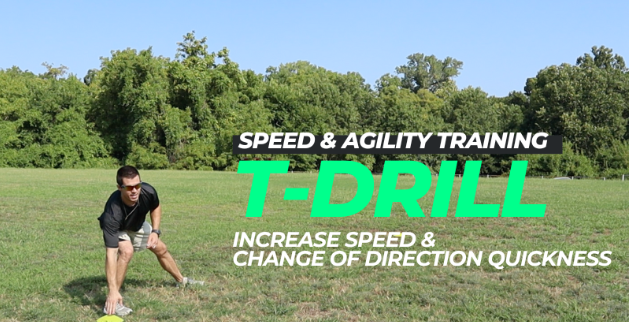
Image taken from Keil Performance
Goal: Develop acceleration, deceleration, and change of direction.
Why it matters: Simulates game-like patterns like sprinting, stopping, and moving laterally.
Equipment: Four cones in a T shape.
How to do it: Sprint forward, shuffle side-to-side, and backpedal to start.
Focus: Stay in control and maintain a low stance with hips.
(Diagram)
4. Box Drill
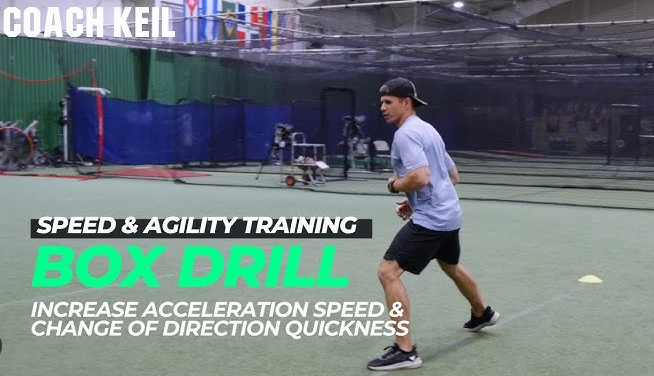
Goal: Build agility in all four directions.
Why it matters: Outfielders and baserunners must pivot and move efficiently from any angle.
Equipment: Four cones form a square, 5–10 yards apart.
Execution: Move around the box forward, sideways, and backward — mix directions to mimic game flow.
(Diagram)
5. 5-10-5 Shuttle (Pro Agility Drill)
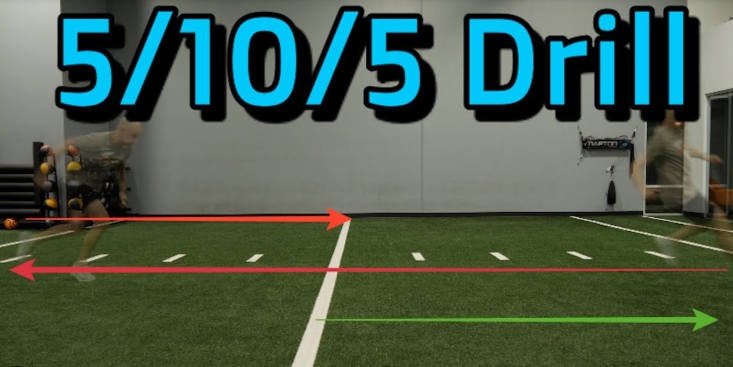
Image taken from zaccupples.com
Goal: Test and train explosive acceleration and direction change.
Why it matters: Replicates quick bursts seen in steals, fielding, and reacting to contact.
Equipment: Three cones in a line, 5 yards apart.
How to do it:
Start at the middle cone.
Sprint 5 yards right, touch.
Sprint 10 yards left, touch.
Sprint back 5 yards to the center.
Coaching Tips:
Stay low during cuts.
Push off the inside foot.
Keep eyes up.
Elite high school players often complete the drill in 4.2–4.6 seconds.
Get the most accurate timing with a Sklz Speed Gates.
More details can be found here.
6. Reaction Ball Drill
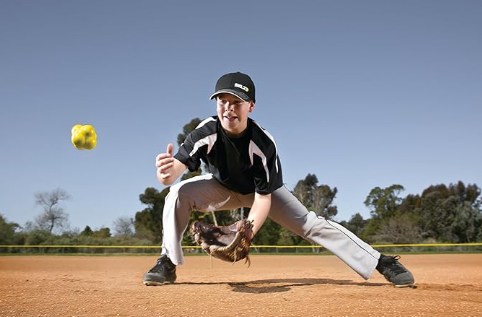
Goal: Improve reflexes and reaction time
Why It Matters:
Baseball is unpredictable. Bad hops, deflections, and split-second reads separate average defenders from reliable playmakers. This drill trains players to react—not guess.
Equipment: SKLZ Reaction Ball
Execution:
Drop or bounce the reaction ball from waist height
React instantly to the ball’s movement
Secure the ball as quickly as possible
Reps:
10–12 reps per set
Emphasize quick first movement, not speed after the catch
(Diagram)
7. Crossover Step Drill

Goal: Strengthen the crossover step for covering ground quickly.
Why it matters: Vital for outfielders tracking fly balls or baserunners getting a jump.
Equipment: Cones spaced 10 feet apart.
Execution: Cross the lead foot over the trail foot, maintain balance, and repeat laterally.
(Diagram)
How to Fit Agility Work Into Busy Schedules
You don’t need hours. With little time, agility still delivers big results.
Good ways to include agility work:
10–15 minutes before practice
As part of weekly baseball workouts
Rotating stations in training programs
A comprehensive approach that combines agility, speed, and strength helps players achieve peak performance without overtraining.
Equipment Checklist
You don’t need a full training facility — just a few affordable tools:
Open space (grass, turf, backyard, or gym floor)
From Young Athletes to Elite Players
Young athletes: Emphasize fun, coordination, and confidence
Older or elite players: Increase speed, complexity, and decision-making under fatigue
Well-designed training regimens adapt to the player’s ability while steadily increasing demands.
Final Takeaway: Agility Builds Better Baseball Players
The benefits of speed go far beyond the stopwatch. When athletes move better, think faster, and react quicker, they become better baseball players overall.
Consistent baseball agility drills improve athletic potential, sharpen instincts, and prepare players for the unpredictable nature of the game. Train agility with purpose, and you’ll see it show up where it matters most—between the lines. ⚾
Agility Training FAQ
How often should baseball players do agility drills?
2–3 sessions per week, 15–20 minutes each, is ideal.
Do agility drills help with speed?
Yes — agility work improves acceleration, deceleration, and first-step explosiveness, complementing sprint training.
Can agility drills prevent injuries?
Absolutely. They strengthen stabilizer muscles and teach control, reducing ankle and knee stress.
Are agility ladders effective for baseball players?
Yes. They enhance rhythm, coordination, and balance — key traits for consistent fielding and baserunning.
What’s the best way to make drills game-like?
Add reaction cues, competition, or timed elements to simulate real decisions.
Coaching Resources:
Related reading:
Monday Morning Staff Meeting Newsletter
Empowering coaches to elevate players, transform programs, and lead with confidence.
The Monday Morning Staff Meeting Newsletter is the only newsletter in the world dedicated to serving high school baseball coaches. Every Monday, the latest issue is sent to thousands of coaches. Each message includes tips, ideas and strategies for player, staff, and program development all backed by decades of successful experience as a high school baseball coach.
You can join this coaching staff for free by entering your email now.
WANT MORE?
What can I help you with?
I want help with Defensive Practice Plans
I want help planning my Pitcher's Weekly Routines
I want help organizing a year long baseball program
I want help with a Head Coach's Manual
I want help with Special Situations
I want to read the Articles
I want to take a look at all the Coaching Resources
Or if you just want to go back to what you were reading, hit BACK in your internet browser!