Best Indoor Baseball Practice Plan for Small Spaces
It's cold, it's wet, or the sprinkler system flooded the field. What do you do?
Send the players home or find a way to get some work done?
I hope you find a way to get work done.
Depending on where you live, indoor practices can make or break your season.
You’re dealing with limited space, crowded practice times, and players at different skill levels; the margin for error is small. A bad practice plan leads to standing around. A good one creates real growth.
This post outlines one of the most efficient ways to run an indoor baseball practice that keeps baseball players moving, engaged, and improving. Whether you’re working with young athletes, younger players, or players of all ages preparing for the next level, having an organized indoor practice plan is vital for player development.
To get started, you need to decide two things: (1) who stays to practice and (2) where you practice. Here is my response based on my decades of experience.
Who stays to practice?
-
Varsity only
No more than one hour and fifteen minutes - they will lose focus
-
No more than 18 in the gym
-
If you have a large team, hold multiple practice sessions (45 minutes)
One infield session
One outfield session
One pitchers and catchers session
-
-
Send sub-varsity home
Immature
Not serious about the game
Inability to get rides as quickly as the varsity on short notice
Where will you practice?
-
Put the team in a classroom and chalk-talk about all situations
Cuts and Relays
Backing Up all Throws
1st and 3rd Defense
1st and 3rd Offense
Bunt Defense
Bunt Offense
Third Strike Rule
Infield Fly Rule
-
Put the team in the gym
Early in the morning before school
Late after basketball practice
-
Put the team in the cafeteria
Move the tables and get some work in
Be sure to put the tables back
Key Components of a Great Indoor Practice
The best indoor baseball training sessions share a few things in common:
High tempo
Purposeful baseball drills
Stations that isolate movements and build muscle memory
Emphasis on proper fundamental work
Game-like intent, even indoors
A great way to do this is by organizing practice into short, focused training exercises that rotate players quickly and eliminate standing around.
Dynamic Warm-Up and Throwing Progression
Every training session starts with preparation.
Begin with a brief, dynamic warm-up that focuses on upper body, hip, and shoulder mobility. From there, move immediately into throwing.
Throwing Focus:
Proper footwork
Strong glove side
Balanced ready position
Finish through the target
Use a controlled long toss progression adapted for indoor workouts. Even without full distance, players can improve arm strength by focusing on intent, clean mechanics, and accurate throws.
This is especially important for middle infielders, the second baseman, and anyone involved in turning the double play at first base.
Hand-Eye Coordination Using Tennis Balls
One of the best drills for improving hand-eye coordination indoors involves using tennis balls.
These indoor drills improve:
Quick reaction time
Quick hands
Tracking ball travel
Examples include:
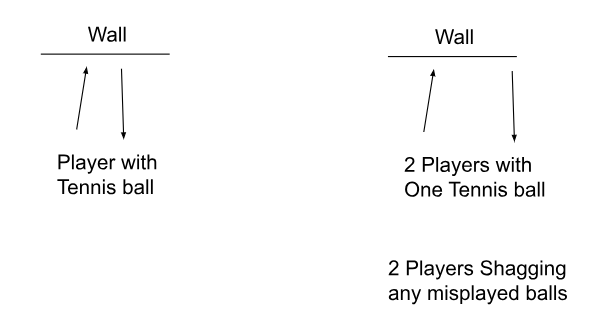
All players throw a tennis ball against the wall and on the rebound catch it with two hands and then later improve to one hand
Now use two players with one ball and have them work hard to get the ball by their partner
Rapid-fire tosses forcing the first step reaction
Tennis ball work is a great way to train players while still challenging advanced athletes.
Offensive Stations: Tee Work, Toss, and Cage Hitting
Hitting development doesn’t stop indoors.
Batting Tee & Tee Drills
Use the batting tee as the starting point for every hitter. Tee drills allow players to:
Isolate movements
Clean up swing path
Feel the back foot connection
Build repeatable muscle memory
I'd recommend taking your sock nets indoors and placing them on top of the school's large door mats to protect the floor.
Front Toss and Soft Toss
Progress into front toss and soft toss to bridge mechanics into timing. Focus on:
Driving a line drive
Staying through the ball
Finishing strong
These are specific drills that prepare hitters for real batting practice later in the year.
Batting Cages
If you have batting cages or an indoor batting cage, rotate small groups through live reps using real balls. Even short swings at game speed matter.
If you don't have an indoor batting cage or can't get your sock nets indoors, then open up the batting range (LOL) - like this.
Tennis Ball Batting Practice
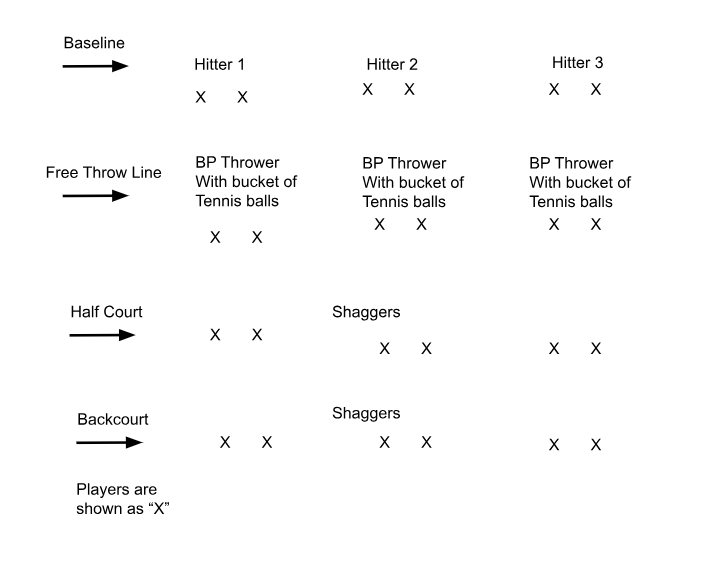
Here is a great way to practice fastballs and off-speed pitches with tennis balls:
To replicate a fastball, just throw the tennis ball with normal BP speed
To replicate an off-speed, throw the tennis ball to the floor so that it bounces into the strike zone. That's right, throw the ball at the floor so it bounces into the strike zone. This simple bounce will force the hitter to wait.
When working off-speed, this is what you are looking for:
When the pitcher loads - the hitter loads
When the pitcher strides - the hitter strides
When the ball hits the floor to bounce - the hitter's front foot hits the floor
When the ball is bouncing up - the hitter is waiting
When the ball enters the zone - the hitter will swing and follow through
Defensive Skill Stations
Defense often separates good teams from great ones on game days.
Infield Work
Hard ground balls
Short hop plays
Funnel to throw with clean transitions
Middle infielders should rehearse feeds, pivots, and communication on the double play.
Outfield Drill
An effective outfield drill indoors focuses on:
First step reads
Drop steps
Catching the fly ball at the highest point
Even without full flight, players can train angles, routes, and communication skills.
Here is an example of what you can do.
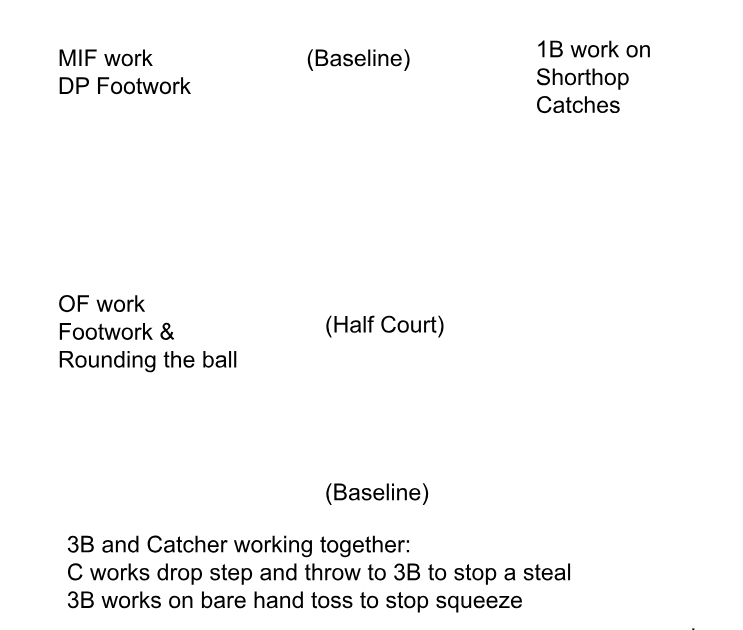
Take this example, split the court into quadrants and give the players an opportunity to replicate game-like situations, game-like reps, at game-like speed in a close and confined space. Throwing the ball across the field or throwing the ball at full speed is not necessary. When in the gym, the goal is to work on the mind and body control (feet-hips-glove).
Catching and Reaction Drills
Catching drills should reinforce:
Blocking footwork
Receiving with soft hands
Explosive movement from the right knee up
Pair this with reaction-based drills where the first player reacts, fields, throws, and rotates to the back of the line quickly to maintain pace.
Competitive Games to Finish Practice
Finish with fun games that simulate game situations.
Examples:
Accuracy throwing competitions
Rapid infield outs
Reaction-based last-ball challenges (the last ball decides the winner)
These games reinforce focus the rest of the way through practice and build energy heading into the end of practice.
Indoor Baseball Practice Plan
Here is an example of a one-hour indoor practice plan built for 18 players, limited space, and high engagement. Every player is moving, throwing, hitting, or thinking baseball the entire hour.
Download the FREE Indoor Practice Template
60-Minute Indoor Baseball Practice (18 Players)
Practice Goal:
Maximize reps
Improve fundamentals
Keep tempo high
Eliminate standing around
Setup Notes (Before Practice Starts):
3 hitting stations (nets or cages)
3 throwing lanes (short to long)
Buckets ready
Cones taped lines for footwork
Assign players to groups before practice
Split players into 3 groups of 6.
Dynamic Warm-Up + Throwing Prep (5 min)
All players together
Jog → shuffle → backpedal
Hip mobility, thoracic rotation
Arm prep (bands or light plyos if available)
Coaching Emphasis:
Tempo > perfection
This is not conditioning, this is preparation
Throwing Development (10 min)
3 Groups / 3 Stations (rotate every 3–4 min)
Station 1: Wrist → Short Catch
Wrist flips
One-knee throws
Focus on grip & spin
Station 2: Footwork + Throw
Shuffle → throw
Rocker → throw
Emphasize direction & balance
Station 3: Long Toss (Indoor Version)
One-hop throws
Crow hop mechanics
Pull-down intent without max distance
Coaching Emphasis:
Every throw has intent
Bad throws = reset feet, don’t rush
Offensive Stations (15 min)
3 Stations – 5 minutes each
Station 1: Tee Work (Mechanical)
Inside/outside location
Opposite-field focus
8–10 quality swings
Station 2: Front Toss / Short Toss (See Tennis Ball BP Above)
Game-speed intent
Track pitch before swinging
Miss = reset, don’t rush
Station 3: Dry Swings + Vision
Load timing
Separation
Small-ball drills or tracking balls
Coaching Emphasis:
Swing decisions matter
Quality swings > swing count
Defensive Skill Work (15 min)
3 Stations – 5 minutes each
Station 1: Infield Footwork
Quick feet drills
Funnel to throw
Short hops (tennis balls if space is tight)
Station 2: Outfield First Step + Catch
Drop-step reads
Catch and throw to target
Emphasize angles, not speed
Station 3: Catchers / Pitchers
Catchers: receiving, blocking footwork
Pitchers: PFP footwork or mirror drills
Coaching Emphasis:
Defense is footwork first
Hands follow feet
Competitive Team Drill (10 min)
Options (Rotate Daily):
Rapid-fire infield outs
Hit & react (tennis balls)
Throwing accuracy competition
Baserunning reads (verbal + movement)
Rules:
Missed rep = quick correction, next guy goes
Keep score
Losers clean equipment
Coaching Emphasis:
Game speed
Accountability
Energy
Review + Reset (5 min)
Team up
-
One coaching point on:
Offense
Defense
Effort
Set expectation for next practice
End on clarity, not chaos.
Download the FREE Indoor Practice Template
Why This Indoor Practice Plan Works
This approach:
No lines
No standing
Built-in rotations
Every skill is developed
Game-Speed intent taking place indoors
Maximizes reps in a limited space
Works for young athletes and varsity players
Builds skills the correct way
Transfers directly to outdoor play
Indoor baseball practice isn’t about survival; it’s about working and teaching the proper fundamentals so that you can have proper player development. When structured correctly, indoor workouts can become the foundation of your training regimen and set your team up for success once the season arrives.
That’s the best way to make indoor practices matter.
Monday Morning Staff Meeting Newsletter
Empowering coaches to elevate players, transform programs, and lead with confidence.
The Monday Morning Staff Meeting Newsletter is the only newsletter in the world dedicated to serving high school baseball coaches. Every Monday, the latest issue is sent to thousands of coaches. Each message includes tips, ideas and strategies for player, staff, and program development all backed by decades of successful experience as a high school baseball coach.
You can join this coaching staff for free by entering your email now.
WANT MORE?
What can I help you with?
I want help with Defensive Practice Plans
I want help planning my Pitcher's Weekly Routines
I want help organizing a year long baseball program
I want help with a Head Coach's Manual
I want help with Special Situations
I want to read the Articles
I want to take a look at all the Coaching Resources
Or if you just want to go back to what you were reading, hit BACK in your internet browser!